
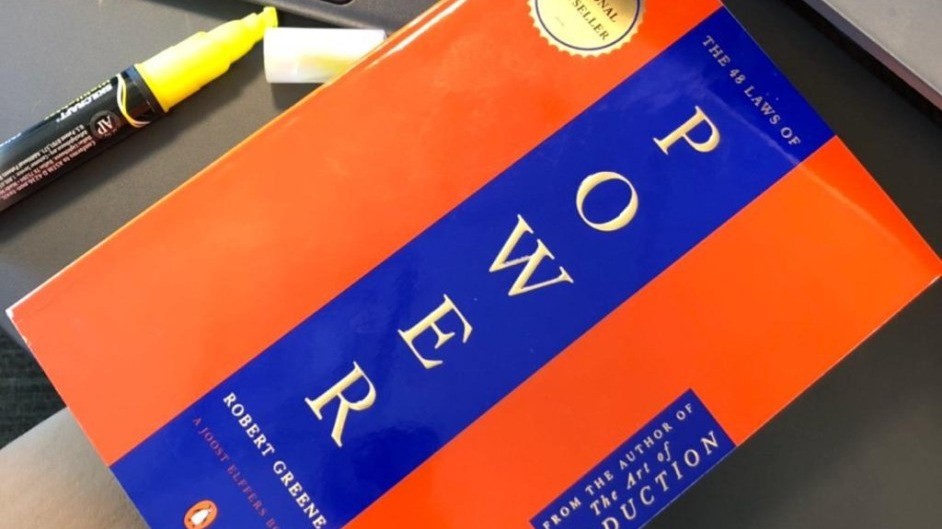

Over the past two weeks, I dedicated time to rereading Robert Greene’s The 48 Laws of Power, a book that continues to provoke strong opinions more than two decades after its publication (1998). Some readers hail it as a masterpiece; a raw, unfiltered look into the dynamics of power and influence. Others condemn it as manipulative, cold, and even dangerous when applied without moral restraint.
I must admit, both camps have a point. The book is bold in its assertions, sometimes unsettling in its advice, and often rooted in historical examples of rulers, generals, and leaders who wielded power ruthlessly. But here is what I firmly believe: The 48 Laws of Power should not be swallowed whole, nor should it be dismissed entirely. It is not a sacred manual or the Holy Scriptures; it is Robert Greene’s perspective, shaped by his study of history, psychology, and human interaction.
For me, the true value of the book lies in reading it with discernment; absorbing the insights that resonate, questioning those that don’t, and ultimately applying what aligns with one’s principles and context. Power, after all, is part of everyday life. Whether in business, politics, leadership, or even personal relationships, understanding the dynamics of influence is essential. The book i believe does not corrupt as others assert but rather outdoors the inner self of people. You have the power to choose what works for you or not.
As I revisited the book, certain laws stood out more strongly than others. Within the first 20 laws, I found seven that I believe are especially worth reflecting on and applying wisely so i will comment on them briefly for your perusal:
Law 1: Never Outshine the Master
Law 1: Never Outshine the Master
History is filled with cautionary tales of talented individuals undone by their brilliance. Quoting the book, Nicolas Fouquet, finance minister under King Louis XIV of France, learned this the hard way. After throwing an extravagant party to impress the King, he was swiftly imprisoned for life; not because of corruption, but because he made his master feel insecure. The lesson is clear: talent must be exercised with tact. Shine in ways that support authority until you’ve built your own foundation know when to exaggerate your presence or substance else you give yourself up for suspicion and hatred.

Law 3: Conceal Your Intentions
In the realm of strategy, overexposure is a critical weakness. The ancient strategist Sun Tzu emphasized this in his book The Art of War when he wrote: “All warfare is based on deception” (Sun Tzu, trans. Griffith, 1963, p. 66). The principle applies not only to battlefields but also to politics, business, and personal ambition. When one reveals their goals too early, they invite resistance, envy, or even sabotage from rivals and skeptics. Concealment, therefore, is not about dishonesty but about timing and protection.
History also offers powerful examples. During World War II, the Allies launched Operation Bodyguard, a deception campaign that concealed the true landing site of D-Day. By misleading the Germans into expecting an invasion at Pas de Calais, the Allies secured a decisive advantage in Normandy (Holt, 2004). Similarly, in business, Steve Jobs often concealed Apple’s product roadmap until the moment of launch, ensuring that competitors could not preemptively counter his innovations. This has been Apple’s strategy till date.
In everyday life, this law reminds us that transparency is not always a virtue in competitive environments. Protecting your vision until it is ready to manifest allows for focus, strategy, and impact. Concealment, in this sense, is a form of wisdom; ensuring that your plans are not derailed prematurely by external forces.

Law 4: Always Say Less Than Necessary
From ancient courts to modern boardrooms, restraint in speech has often distinguished the wise from the reckless. I read Abraham Lincoln quote that said, “Better to remain silent and be thought a fool than to speak and remove all doubt.” This law reminds us that words are powerful, but silence is often more strategic. A measured tongue commands respect. But a lose tongue invites trouble.
The Flip Side: There are moments when silence is not golden but dangerous. In negotiations, for example, withholding too much information can breed distrust. Leaders, too, must often speak with clarity to inspire confidence. In these cases, saying “more than necessary” is the very thing that earns trust and credibility. The key is discernment; knowing when brevity empowers and when transparency builds stronger influence. Just know and understand when to say what.

Law 5: So Much Depends on Reputation, Guard It With Your Life
Reputation has always been a significant currency for me. In this book, Napoleon Bonaparte leveraged his image as a military genius long before his empire peaked, and it inspired loyalty and fear alike. Today, in a digital age where a single misstep can go viral, reputation is even more fragile. Guarding it requires integrity, intentionality, and the discipline to protect one’s brand consistently.
Law 9: Win Through Your Actions, Never Through Argument
Philosopher Dale Carnegie, in his book How to Win Friends and Influence People, warned against heated arguments: “A man convinced against his will is of the same opinion still.” Dale is one of my favorite writers till date. Greene echoes this truth. Arguments breed resentment; results win respect. Whether in politics, business, or personal growth, actions remain the strongest testimony. No one made history with mere arguments with nothing to show for it. History makers depart the earth but their works still live.
The Flip Side: There are times when words are unavoidable. Martin Luther King Jr.’s “I Have a Dream” speech changed hearts long before policies followed. Arguments, when thoughtful and principled, can shape culture, laws, and public opinion. Sometimes, the argument is the action. The wisdom lies in knowing when to demonstrate and when to declare. Arguments are won with action.
Law 13: When Asking for Help, Appeal to People’s Self-Interest
History confirms this law repeatedly. If you read the history of World War II, U.S. leaders secured alliances not by appealing to morality but by showing allies how cooperation served their interests. Human nature gravitates toward self-preservation. By aligning your request with others’ goals, you create partnerships rooted in mutual benefit. This is not manipulation, it is enlightened collaboration. Our world and geopolitics thrive on this narrative.
The Flip Side: There are relationships where appealing only to self-interest undermines authenticity. True friendship, mentorship, and leadership often thrive on loyalty, values, and shared vision beyond personal gain. Sometimes people help not because it serves them, but because they believe in you, which I am a testimony of. Reducing every exchange to self-interest risks transactional relationships. The art is knowing when to appeal to interest, and when to appeal to heart.
Law 16: Use Absence to Increase Respect and Honor
Julius Caesar understood the power of absence. After victories, he often withdrew from Rome temporarily, allowing his legend to grow in his absence before returning in triumph. In leadership, relationships, or business, constant presence can breed familiarity and undervaluation. Strategic absence sharpens appreciation and strengthens authority. Absence creates value and gives you room to evaluate yourself and impact but be strategic.
The Flip Side: Absence, if miscalculated, can turn into irrelevance. In personal relationships, too much withdrawal can weaken bonds instead of strengthening them. In leadership, disappearing at critical moments can erode trust. Presence, consistency, and accessibility are sometimes what sustain influence. The wisdom here is balance, knowing when to step back, and when to show up fully.
My Perspective
These “laws” are not rigid formulas but flexible strategies. The true mastery lies not in obeying them blindly, but in knowing when to apply them, flip them, or even break them entirely. Power is dynamic, context-driven, and deeply human. Sometimes silence is power, sometimes speech is. Sometimes reputation is your strongest shield, other times reinvention requires letting it burn.
As I reflect, my conclusion is this: power is not about following rules; it is about reading the room, understanding human nature, and adapting wisely. That is where the real strength lies.
In my next reflections, I will dive into another set of laws I believe are equally important; laws that, when studied critically and applied thoughtfully, can sharpen strategy and elevate leadership. Stay with me.
Michael Khojo Ameyaw